Monday, November 10, 2008

Vows to Act Swiftly


Friday, November 7th just three days after his victory, president elect Barack Obama promised that he would take immediate action to help with the current economic crisis. In his first press conference at the Hilton hotel in Chicago, Obama talked about his goals to help the current unemployment rates, plummeting payrolls, and the major Detroit issue. Friday’s reports show that 1.2 million jobs have been lost this year, which is the worst since March 1994. The unemployment rate is currently up at 6.5% from its previous 6.1%. Another report shows that the nation’s largest automakers GM and Ford show a huge loss. GM (General Motors Corp.) facing a $4.2 billion loss, states that it could be broke within six months. Ford Motors Corp. reported $3 billion loss. Both leading automakers state that they are being forced to reduce their staff and reduce capital spending to extend their life expectancy. This will only add to the unemployed, cause a decrease in spending, and increase in saving which would only slow down our economies growth.
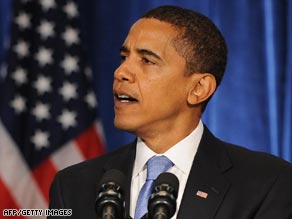
To help these current economic issues president elect Obama, promises to pass a major economic stimulus plan as his first act as president and accelerate the rescuing of Detroit’s auto industry. During his White House visit he asked the Bush administartaion to speed up the assistance on Detroit; “help the auto industry adjust, weather the financial crisis, and succeed in producing fuel-efficient cars here in the U.S.A.”-Obama.

I personally think that what Obama is trying to do with the stimulus plan is nice and may be the only plan we have right now, but I think there are better plans we can come up with than just throwing money at the problem and hoping it goes away. To me it feels as if we are using another credit card to pay off the last credit card. In the end that money has to be paid back, and who pays for it? We do, either in the short term or long term. As for GM and Ford I think they should have managed their companies better. By laying off workers who make the cars would cause more work and fewer employees which could reduce the quality of the cars since the employees have to work harder. Instead of laying off workers they should reduce the executive’s wages. While the workers get min. wages the executives make millions. The Detroit auto industry also needs to make better cars to compete with leading auto makers like Toyota, Nissan, Honda, etc. By making them more fuel efficient or run off different energy supplies and more reliable.

Press Video

Questions:
1) How do you feel about the stimulus plan and how do you think it will affect us? Will it have a short term or long term effect?
2) Are there any other ways to stimulate the economy?
3) How do you feel about another bail out with GM and Ford? Will it only slow down or lengthen the economic recovery? How will it affect the tax payers and the employees that work for GM and Ford?
4) Should we let a failed or poorly managed company fall and not be bailed out? Do you believe that sometimes you have to hit bottom and start fresh?

Friday, November 7, 2008

"Pelosi Pushes Two-Part Stimulus"


Speaker of the House, Nancy Pelosi, poses a two-part economic recovery plan with a compare-and-contrast style view of President-elect Barack Obama's targeted views of a recovery plan during his campaign. Her proposed plan entails an immediate package to try to boost the economy, and then a second attempt with a permanent tax cut when Obama is sworn in. Her plan, however, does differ from Obama's campaign goals.


For an immediate boost, Pelosi wants to impose a $60 to $100 billion stimulus package to go into effect this month. She wants to impant the immediate spark because of worsening unemployment rates in the US, the wavering stock market, and falling house prices. She believes that during the lame-duck period between Bush's last days in office and Obama's first term are the time to act to ensure some sort of recovery. Pelosi says, "Let's see if we can't do something, working together now, that gives us a two-month jump," she said. "We'll take the longer view as soon as we take over in January"(http://http://online.wsj.com/article/SB122600310456906045.html). Of course economic recovery is the direction that we should be going in, but is $60 to $100 billion in new spending the way to do this? Would Obama be going against one of his main arguments about McCain's raising of the national debt if he supported this plan?
As for the second part of the recovery plan, Pelosi wants to create a permanent tax cut. This is where she differs from Obama. Obama wants to give tax cuts in the form of a rebate check for middle class Americans making less than $250,000 per year (http://http://www.barackobama.com/issues/economy/). Pelosi's plan is to give a tax cut instead of a rebate because it will boost the economy quicker. She believes that a tax cut puts money in the hands of Americans quicker than a rebate would. Obama meets with his newly appointed economic team of advisors today, so the two will have to come to an agreement about which will help the economy efficiently and effectively.

The following is a video that explains the unemployment crisis along with other hardships in the United States: http://online.wsj.com/video/jobless-rate-shows-more-labor-woes/CA4CB65D-B02B-401F-ACDA-003EFD2282C4.html
With unemployment rates getting worse, a plummeting stock market, and harsh economic times not only in the US but around the globe, do you think the new spending of $60 to $100 billion for fiscal spending will help the economy immediately, and if so, will it only help in the immediate but harm in the long run due to the national debt? Which do you feel will spark the economy more efficiently: a tax rebate check as proposed by Obama, or a tax cut as proposed by Pelosi?

Thursday, November 6, 2008

Obama on Verge of Historic Victory

< href="file:///C:%5CUsers%5CCinnie%5CAppData%5CLocal%5CTemp%5Cmsohtml1%5C02%5Cclip_filelist.xml">

Shouts of victory spread quickly across the country, as the night of Tuesday November 4th welcomed a mood of celebration. A day of waiting, hoping, and praying led to a night of full of excitement.


Presidential elect Barack Obama took one giant step toward the White House on Tuesday night when news of John McCain's defeat in battleground states Ohio and Pennsylvania spread across the nation. Television, internet, and a favorite of my generation text- message, facilitated this spread. Voters between the ages 18-29 voted more than two thirds for Obama. More than other age brackets, the millennial generation views Obama as that man who can bring about a real change. McCain represents the obsolescent views of American culture and the younger generations seek to create their own America more conscience of its global perception. Did this have anything to do with McCain’s inability to gain electoral votes?


McCain’s loss in the state of Ohio was very important because no republican candidate has ever won the election without the support of Ohio. This loss was also accompanied by that of other key swing states which McCain was hoping to capture. One of the main down falls of the McCain campaign was the inability to connect with the American population on the important issue of economics. Eight to ten voters agreed that the state of the economy was the number one issue of the campaign. McCain’s tried to paint Obama as one who planned on increasing taxes; little did he know the American population felt that all taxes would be raised no matter who they choose for president. In the same way he was unable to unfavorably depict Obama, he could not make the American people believe that he had their best interest in mind. Voters agreed that Obama was more in touch with the common people and their needs. This translated into the feeling of superior judgment by Obama increasing his capabilities as president. Do you believe in Obama’s idea of giving help to those who need it most? More inline with McCain? Why or why not.


I personally interpret Barack Obama’s victory as more than the election of the 44th president. It represents a change in the system that shouts equality and fairness but does not grant these privileges to all its citizens. For centuries minorities saw celebrations of independence and constitutional rights as nothing more than hypocrisy, for they only included certain Americans under the scope of their protection. But this is changing with the election of the first African American president to lead the nation and free world. November 4th truly was a day of celebration. What does November 4th mean to you?

Wednesday, November 5, 2008

Election Day 2008

It’s over. The longest and most expensive presidential campaign in U. S. history ended last night with Barack Obama’s clear victory, both in the electoral and popular vote. His victory did not come easy; he had to outfight formidable opponents in Hillary Clinton and John McCain and persuade Americans that he had the ability to lead them in tough times. But the precision and professionalism with which he and his advisors ran his campaign made him the decisive winner and gave America its first African American president. It was a stunning moment, especially for people like me who vividly remember that less than fifty years ago, segregation was legal in the South and de facto segregation was pervasive in the North. Barack Obama’s victory does not mark the end of racism in the United States, but I think that it marks the beginning of the end.

This election galvanized voters of all parties. Everywhere I went yesterday, people sported “I Voted” stickers and were eager to discuss the election. My husband and I went to West Springfield High School at 7:15 AM to vote and found that the line was already snaking its way out of the building. But despite the early hour and the long line, people were upbeat and talkative, energized (in part) by the coffee and baked goods volunteers were selling outside, but mostly by a keen awareness that we were taking part in a historic election. Our long line moved swiftly, and in less than an hour, my husband and I were inside the school and voting. The use of scannable paper ballots made it possible for more people to vote at once, and this new voting method kept the line moving and frustration low. What about you? What happened when you went to vote?

On Mason’s campus, the weather was dreary and damp, but spirits were high.

Student Government ran vans to the Woodson High School polling place, and volunteers promoted this service by becoming “human advertisements.”

Rain apparently, does not damper revolutions!


This guy stole my heart!

Our university was not without its own drama. Yesterday morning, a hacker broke into the Provost’s email account and sent out a fake message announcing that the election had been moved to November 5th. Rumors circulated that Mason students who voted could lose their financial aid.

But such lame attempts proved ineffective against the smart and savvy youthful voters who went to the polls in record numbers. Your demographic – voters between the ages of 18 and 25 – voted overwhelmingly for Obama and helped power him to victory. Now it’s your turn to act upon that mandate and consider how you will help him guide our nation toward economic recovery, energy reform, and improved security both at home and abroad.

How will you meet the challenge Obama made to all Americans in his victory speech last night that change can’t happen without “a new spirit of patriotism, a new spirit of sacrifice?” How has this election influenced your outlook on the future and the role you will play in it as a working professional?